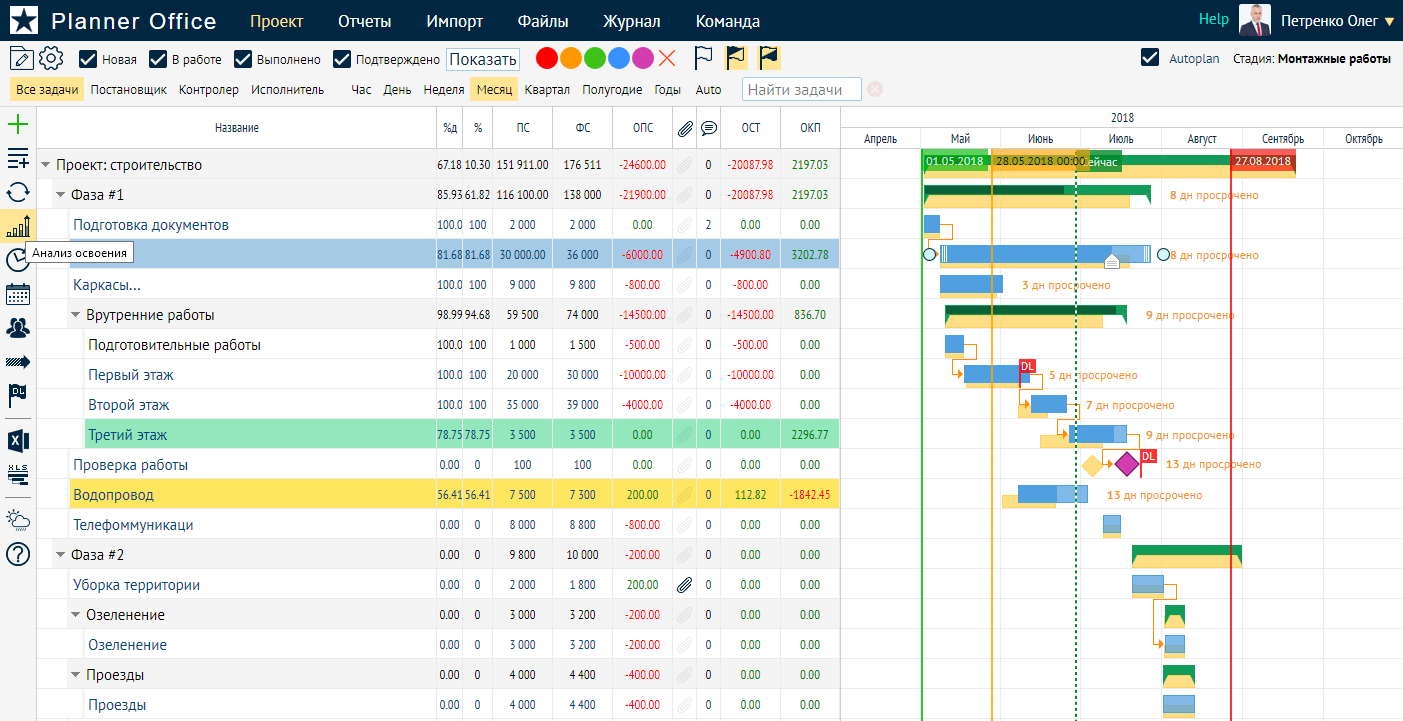
How to choose a project management software. What to look for when choosing

When considering purchasing project management and construction control software, there are a number of processes and procedures to follow to help you make the right decision for your business.
In this article, we'll walk you through a few steps to help any business choose project management software.
1. Set goals
By thinking and creating your business goals, you will be able to set specific criteria that the software must meet. Goals should be measurable, achievable, realistic and timely. By following this goal setting process, your business will be on the right path to success.
Some target examples:
-
Increase in revenue and profitability of the company;
-
Improve communication between office and construction site;
-
Convenient display of data and availability of information;
-
Improving the productivity of both workers in the field and staff in the office;
-
Improve customer and employee satisfaction
2. Define requirements
The choice of software requires careful thought and consideration. All companies are different, and therefore the requirements & nbsp; for the needs of each company.
Some requirements:
- Is the software easy to use and fairly easy to learn?
- Whether the selected software uses Gantt chart, kanban , is there resource management, material accounting and earned value analysis?
- Will the program match your three most unique processes you do?
- Will additional training and support be required after implementation?
- Are you already using similar software or services and do they need to interact?
- Does the software meet the current needs of your business?
- Is project management software scalable to meet future needs?
By determining what your business requirements will be and what qualities the product should have, you can reduce the risk of introducing inappropriate software and make sure that the pros and cons are considered before you start using the service. One of the advantages is the availability of a free trial version or demo access to the service.
3. Explore the offers of the software market.
Once goals and requirements are set, the next step is to research and interact with software vendors.
There are several recommendations to consider when choosing:
Ask questions specific to your business processes to make sure the product meets your needs.
Ask for a demo to get used to the feel of the software.
Determine if the software meets your technology needs, such as whether you can work online or if you need to host the software on your local server.
4. Choose a solution and get started.
Once you have selected the software and are confident that it can meet your business needs, you are ready to begin the implementation process.
After several months of using the software, conduct a system audit to see which processes are working and which may require additional attention and training. Also, start evaluating additional features that can help further improve your business.